Latest posts
-
Leptin Resistance: Why Your Brain Stops Hearing the Fullness Signal

Leptin tells your brain how much fat you have stored, but in many people the brain stops listening. Here is what leptin resistance is, what research shows, and what helps.
-
Sodium Butyrate and Brain Health: 5 Key Research Findings
Sodium butyrate, a short-chain fatty acid made by your gut bacteria, shows brain-protective effects in Alzheimer’s, Parkinson’s, and Huntington’s research. Here is what the studies show.
-
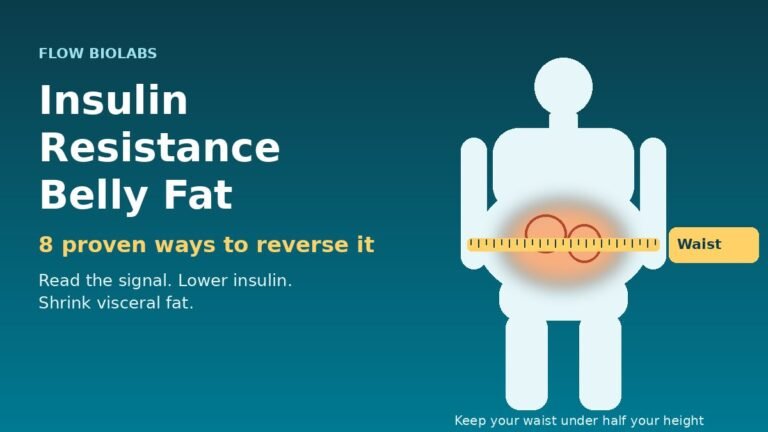
Waist-to-Height Ratio: The Simple Test That May Beat BMI
Keep your waist under half your height. Waist-to-height ratio predicted heart and metabolic risk better than BMI. Here is how to check it and what the numbers mean.
-
Fermented Foods and Gut Health: What a Stanford Trial Found
In a Stanford trial, fermented foods boosted gut microbe diversity and lowered inflammation markers in 10 weeks. Here is what they are, what the research shows, and how to start.
-
Beet Juice and Blood Pressure: How Much Works, According to Trials
Beet juice lowered systolic blood pressure by about 4 to 8 points in trials. Here is how it works, how much to drink, and what remains uncertain.
-
Chronic Stress and Aging: How Stress Affects Your Cells + What Helps
Chronic stress is linked with shorter telomeres and faster cellular aging. Here is what the research shows and 5 science-backed ways to buffer stress.
-
GLP-1 and Insulin Resistance: What the Research Shows
GLP-1 and insulin resistance: what clinical trials show about how GLP-1 receptor agonists improve insulin sensitivity, blood sugar, and metabolic health.
-
Lack of Sleep and Your Immune System: What Studies Show
People who slept under six hours were four times more likely to catch a cold. Here is how lack of sleep affects your immune system and vaccines, and how to protect both.
-
Early Time-Restricted Eating: What the Research Really Shows
Early time-restricted eating means eating earlier in the day. Here is what trials show about insulin, blood pressure and weight, where results are mixed, and how to start.
-
Early Signs of Kidney Disease: Why Most People Miss Them + 2 Key Tests
About 9 in 10 people with chronic kidney disease don’t know it. Learn the early signs, the two simple tests that catch it, who is at risk, and how to protect your kidneys.
-
Push-Up Test and Heart Health: What a 10-Year Study Found
Men who could do 40 push-ups had 96% lower heart disease risk in a 10-year study. Here is what the push-up test shows, how to do it at home, and how to build strength.
-
Olive Oil and Longevity: What a 28-Year Harvard Study Found
People who used just over half a tablespoon of olive oil a day had a 19% lower risk of death in a 28-year Harvard study. Here is what the research shows and how to use more.
-
Insulin Resistance and Belly Fat: 8 Evidence-Based Ways to Improve It
Insulin resistance belly fat is one of the clearest signals your metabolism sends. Learn how to read it and 8 proven ways to reverse it, backed by research.
-
Hearing Loss and Dementia: What the Research Shows + How to Protect Your Brain
Hearing loss is one of the largest modifiable risk factors for dementia. Here is what major studies show, whether hearing aids help, and simple steps to protect your brain.
-
Fatty Liver Symptoms: Why Most People Miss Them and How to Support Liver Health
Fatty liver disease affects about 1 in 3 adults and usually has no symptoms. Learn the signs, who is at risk, how it is diagnosed, and what research shows about reversing it.
-
Sleep and Testosterone: How Short Sleep Lowers Levels + What Helps
Testosterone rises during sleep. Here is what research shows about short sleep and testosterone, which sleep problems matter most, and simple ways to protect both.
-
Knee Arthritis Exercise: What Dozens of Trials Show + Best Moves
Exercise is a first-line treatment for knee arthritis. See what the research shows, the best low-impact exercises, and how to progress safely with sore knees.
-
Cyclic Sighing: The 5-Minute Breathing Technique Research Supports
Cyclic sighing is two inhales and one long exhale. A Stanford trial found five minutes a day improved mood more than meditation. Here is how to do it and why it works.
-
ApoB Test: What It Measures and Why It May Beat LDL
An ApoB test counts the cholesterol particles that can clog arteries. Here is how it differs from LDL, what research shows, and who should consider testing.
-
Walking Speed and Lifespan: 4 Key Findings + 5 Simple Ways to Walk Faster
How fast you walk is one of the simplest signals of long-term health. Here is what large studies found about walking pace and life expectancy, and how to build a brisker stride.
-
Prediabetes Symptoms: Why Most People Miss Them (and What to Check)
Most people with prediabetes feel no symptoms. Here are the few signs that can appear, the blood tests that confirm it, and what research shows about reversing it.
-
Enclomiphene vs. Testosterone Therapy: Raising T While Keeping Your Own Production
Enclomiphene raises testosterone by restarting the body’s own signal instead of replacing it. Here is what the trials show about testosterone, fertility, timing, and the labs to track.
-
Growth Hormone Peptides vs. Injected GH: Why Your Body’s Own Pulse Matters
Growth hormone peptides like tesamorelin, CJC-1295 and ipamorelin trigger your body’s own GH pulse instead of replacing it. Here is what the research shows about healing, fat loss and safety.
-
Type 2 Diabetes Is More Than Blood Sugar: What a 1.6-Million-Person Study Shows
A 1.6-million-person study found the combined risk of kidney disease, heart failure, or death reached 55% within 10 years of a type 2 diabetes diagnosis. Here is what it means and what to ask your clinician.
-
GLP-1 and Strength Training: How to Protect Muscle While You Lose Weight
GLP-1 weight loss includes some muscle. Here is what trials show about lean mass on semaglutide and tirzepatide, and how strength training and protein help protect it.
-
GLP-1 Cost in 2026: Wegovy, Zepbound and Compounded Prices Compared
How much do GLP-1s cost in 2026? Compare compounded semaglutide from $59/month with Wegovy and Zepbound cash prices, and see 7 providers side by side.
-
Orexin: The Brain Chemical That Decides Whether Your Effort Is Worth It
A 2026 PNAS study found orexin neurons track effort and expected reward. Here is what orexin is, what the research shows about motivation, and what it does not mean.
-
Sleep Schedule Consistency: What Studies Show + 5 Simple Habits
Large wrist-sensor studies link sleep schedule consistency with lower long-term health risk. Here is what the research shows and five simple habits to try.
-
Quantum Mitochondria: What the 71 THz Study Reports
A 2026 preprint reports a 71 THz signal associated with intact mitochondria and frequency-specific ATP changes in cultured cells. Here’s what the study reports and what researchers still need to test.
-
The Signaling Trap: Why Peptides Cannot Outrun Mitochondrial Dysfunction
Peptides like MOTS-c and SS-31 are not fuel—they are messengers. When cellular machinery is choked by nutrient overload and damaged mitochondrial membranes, external signaling produces marginal returns. Discover why optimizing cardiolipin integrity and baseline metabolic flexibility must come before advanced peptide protocols.
-
Is AI Actually a Better Diagnostician Than Your Doctor? Here’s What the Research Says (2024–2026)
AI already outperforms human doctors on several core diagnostic tasks, according to peer-reviewed research from 2024-2026. Here’s the evidence, the debate, and what it means for you.
-
Your Body Has a Trajectory, Not Just an Age
Quick answer: A new 2026 study of over 11,000 people found that aging isn’t just a number, it’s a measurable physiological trajectory built from 54 blood biomarkers, and that trajectory moves differently for men and women. Tracking your own biomarkers over time, rather than as a single snapshot, is the practical takeaway. What Is the…
-
Peptides vs. Steroids: What’s Actually the Difference
“Are peptides steroids?” is one of the fastest-growing health searches right now — which tells you something important: a lot of people are hearing about peptides for the first time and genuinely don’t know how to place them next to something more familiar. That confusion is reasonable. Here’s the actual answer. The Short Version No…
-
How to Tell If a Peptide Claim Is Real Science or Marketing
Search “peptides” today and you’ll find a wall of near-identical language: clinically studied, research-backed, cutting-edge science. Almost every vendor site, forum thread, and Instagram ad uses the same handful of phrases — which means those phrases have stopped meaning anything useful. If you’re trying to actually understand a compound before deciding what to think about…
-
Protein Timing on GLP-1: What Actually Moves the Needle
If you’re on a GLP-1, you’ve probably already heard “eat more protein” more times than you can count. It’s correct advice. It’s also close to useless without the part that usually gets left out: how do you hit a real protein target when your appetite has been deliberately turned down? Compare 7 GLP-1 providers side…
-
The Brain Reason GLP-1 Weight Comes Back
Most people have heard that if your body isn’t right, your brain can’t be right. What you don’t hear as often is the reverse: as you’re trying to fix your body, if your brain isn’t right, your body’s not going to be right either. Compare 7 GLP-1 providers side by side →Or go straight to…
-
Why the DXA Scan Number Everyone Quotes Isn’t What You Think
If you’ve spent any time researching GLP-1 medications, you’ve probably run into some version of this claim: up to 40% of the weight lost on a GLP-1 is muscle, not fat. It shows up in headlines, in comment sections, in the fine print of supplement ads built to scare you into buying something. Compare 7…
-
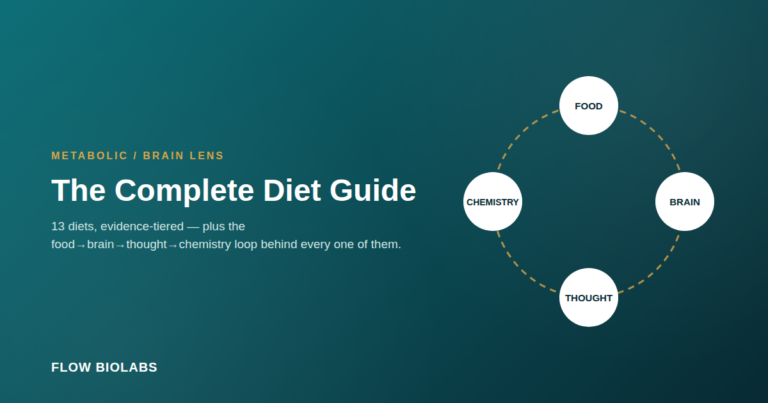
The Complete Diet Guide: Which One Actually Fits Your Signals
Thirteen major diets, broken down the evidence-tiered way — plus the food-brain-thought-chemistry loop behind every one of them, so you can pick with your eyes open.
-
The One Question That Changes a Weight-Loss Plan
After everything — the protein, the sleep, the walks, the stress, the labs — it can feel like there’s too much to fix and no clear place to start. That overwhelm is exactly what stops most people before they begin. So let’s end with the one question that cuts through all of it. Not “what…
-
Your Brain Isn’t Broken — It’s Interpreting: Three Studies on What That Actually Means
Brain fog, hormonal transitions, and chronic stress aren’t vague complaints — new research shows the brain is actively interpreting signals from the body. Here’s what three current studies reveal.
-
Small Changes, Real Signals: What Three New Studies Say About Feeling Better
Three new studies on air quality, mindfulness, and daily routine consistency show how small changes can meaningfully shift how you feel, all by giving the brain a more stable environment to regulate from.
-
The Sleep Window Your Brain Actually Needs to Recover
Three new findings on sleep duration, the brain’s glymphatic cleanup system, and REM-boosting tech all point to the same lesson: recovery is about giving the brain the right conditions, not just logging more hours.
-
Three New Studies Are Quietly Rewriting What Healthy Aging Requires
Three 2026 studies on muscle hormones, frailty-linked stroke risk, and rising heat tolerance limits all point to one coordinating system: the brain. Here’s what the research means for healthy aging.
-
Your Next 21 Days Can Be Simpler Than You Think
By now you’ve seen the pattern in all of this: the problem was almost never your willpower. It was friction — a hundred small points of resistance quietly stacked against you. And once you see that, the way forward gets a lot simpler than the all-or-nothing overhaul you’ve tried and abandoned before. You don’t need…
-
What “Metabolic Health” Actually Means (Beyond the Buzzword)
“Metabolic health” is everywhere now, thrown around by every brand and influencer until it means nothing. And that vagueness costs you — because when a term is fuzzy, you can’t tell real progress from marketing, and you end up chasing the wrong things. So here’s the plain-English version, because understanding it changes what you actually…
-
3 New Studies Reshaping How We Think About Healthy Aging
Three new studies offer fresh insight into healthy aging, including muscle preservation, frailty and stroke risk, and rising heat vulnerability in older adults.
-
Why Your Plan Needs a “Bad Day” Version
Your plan works beautifully — on good days. But life isn’t made of good days. The sick day, the work crisis, the trip, the night everything goes sideways — those are the days that actually decide whether you succeed, and most plans have nothing to offer them but collapse. That’s the flaw. Your plan was…
-
The Sunday Reset That Makes the Whole Week Easier
Most weeks fall apart not because you lack willpower, but because Monday arrives and every healthy choice requires a decision you’re too busy to make well. By Wednesday you’re improvising, by Thursday you’re winging it, and by Friday the whole thing’s unraveled — and you blame yourself instead of the missing plan. One quiet hour…
-
Why You Should Track Strength, Not Just the Scale
You’ve tied your entire sense of progress to a number that moves slowly, lies daily, and says nothing about whether you’re actually getting healthier. No wonder your motivation keeps cratering — you’re measuring the one thing most likely to discourage you. There’s a better scoreboard, and it moves in a direction that actually keeps you…
-
The Craving Reset You Can Use Today
The craving hits and it feels instant — cue to hand to mouth, no gap, no choice. You’ve lost that split-second battle so many times you’ve decided you’re just weak around food. But the problem isn’t your strength. It’s that there’s no pause where a decision could happen. Cravings aren’t commands. They’re waves — and…
-
Why Fasting Is a Tool, Not a Religion
Intermittent fasting gets talked about like a miracle or a scam, with no room in between. So you either force yourself into a fasting window that leaves you miserable and bingeing at night, or you dismiss the whole thing — and either way you miss what it’s actually good for. Fasting isn’t magic and it…
-
The Lab Numbers Worth Discussing With a Clinician
You can feel that something’s off — energy, weight, recovery — but “eat less, move more” hasn’t fixed it, and you’re left guessing in the dark about your own body. Meanwhile, the data that could actually explain what’s happening is sitting in bloodwork you’ve never thought to ask about. Effort without information is just guessing.…
-
Your Brain Does Not Run on a Dopamine Schedule
Your brain doesn’t run on a dopamine schedule. Learn how circadian rhythm, neurotransmitters, light, sleep, movement, and daily habits work together to influence energy and focus—without the hype.
-
The Cardio Question: Why More Isn’t Always Better
You’ve been sold a simple equation: more cardio, more burn, more loss. So you grind longer on the treadmill, punish yourself with extra sessions — and get frustrated when the results don’t scale with the effort. The problem is the equation was always too simple. More cardio isn’t automatically more progress. Past a point, it…
-
Why You Can’t “Just Stop” Eating Ultra-Processed Food
You’ve told yourself to just quit the chips, the snacks, the packaged stuff. Willpower, right? Then you don’t — and you add it to the pile of evidence that you’re the problem. But you’re up against something engineered to beat you. Ultra-processed food isn’t just unhealthy. It’s designed to be nearly impossible to stop eating.…
-
The Food Label Shortcut That Saves You From the Marketing
Food labels are designed to confuse you. “Natural,” “low-fat,” “made with real fruit” — the front of the package is marketing, engineered to make junk feel like a health choice. And every time you buy the story on the front, you undo work you did all week without realizing it. You don’t need a nutrition…
-
Stress Isn’t a Side Note in Weight Loss. It’s the Main Character.
You’ve dialed in the food. You’re moving. And still the results don’t match the effort — so you assume you need to try even harder, cut even more, push even further. But the thing quietly working against you can’t be fixed by more discipline. It’s stress. And grinding harder only pours fuel on it. Chronic…
-
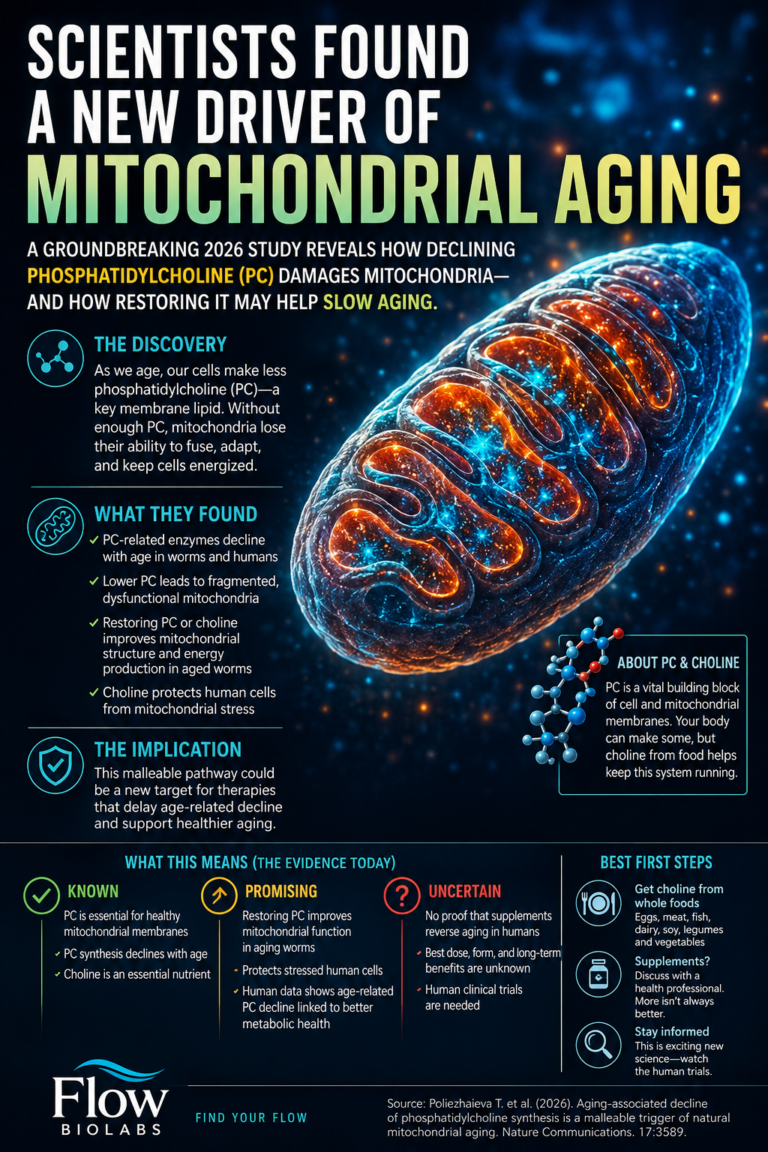
Scientists Found a New Driver of Mitochondrial Aging. Can We Actually Do Anything About It?
Why do our mitochondria lose function as we age? New 2026 research has identified declining phosphatidylcholine synthesis as one possible driver—and researchers found that part of the mitochondrial decline could be restored in experimental models.
-
The Meal Prep Myth That Keeps People Stuck
Every Sunday you feel the pressure: cook fourteen identical containers of chicken and rice, or you’re not “serious.” So either you do it, burn out by Wednesday, and swear off meal prep — or you don’t start at all, because the whole idea feels exhausting. Both roads dead-end. And it’s because you’ve been sold a…
-
The Measurement That Tells You What the Scale Can’t
You’ve handed all your progress to one number on the scale. And on the mornings it doesn’t cooperate, you feel like nothing’s working — even when your body is genuinely changing in ways that number can’t see. You’re keeping score with one stat in a game that has several. That’s why you keep feeling like…
-
The Plateau Is Giving You Information, Not Punishing You
The scale hasn’t moved in two weeks. You’re doing everything you did before, and nothing’s happening — and that quiet dread is creeping in, the one that says this is where it stops working, this is where I quit. Don’t quit. The plateau isn’t a wall. It’s a message, and it’s one you can actually…
-
Your Willpower Is Decided at the Grocery Store, Not the Fridge
You think the hard moment is 9 PM, standing in front of the pantry. It isn’t. That battle was won or lost days earlier, in one aisle, when you weren’t even hungry — and by the time you’re staring into the cabinet, the outcome’s already set. Willpower at night is a myth. What you actually…
-
What Protein Actually Does for a Weight-Loss Plan
You’ve heard “eat more protein” so many times it’s lost all meaning. It sounds like just another rule from just another diet. So you half-follow it, don’t feel much, and move on — missing the one lever that quietly does more work than almost anything else on your plate. Protein isn’t hype. It’s the closest…
-
The Scale Is a Tool, Not a Judge
You step on the scale, the number’s up two pounds, and your whole day sours. You eat differently, feel differently, maybe skip the plan entirely — all because of a number that, honestly, didn’t mean what you think it meant. The scale isn’t lying to you. You’re just reading it wrong — and it’s wrecking…
-
The Weekend Pattern That Quietly Undoes Your Whole Week
Monday through Friday, you’re dialed in. Then the weekend hits, the structure disappears, and two days of “I’ll get back to it Monday” erase everything you built. Come Monday you’re not ahead — you’re starting over. Again. This isn’t a willpower gap. It’s a structure gap, and it’s costing you every single week. Here’s the…
-
Why Late-Night Eating Feels Impossible to Stop
You’re fine all day. Then night falls, and something pulls you to the kitchen — not real hunger, exactly, but a pull you can’t seem to argue with. You’ve promised yourself you’d stop. You haven’t. And you’re starting to think you just lack self-control. You don’t. Late-night eating is almost never about willpower — it’s…
-
Fiber: The Quiet Tool Almost Every Plan Forgets
Everyone argues about protein and carbs. Meanwhile, the nutrient that could fix your hunger, your cravings, and your energy dips barely gets mentioned. Most people eat less than half of what they need — and feel the cost every day without knowing the cause. That nutrient is fiber, and it’s quietly working against you by…
-
The Breakfast Experiment Worth Trying This Week
Here’s a frustrating possibility: the breakfast you think is “healthy” might be the reason you’re starving and foggy by mid-morning. Cereal, a bagel, juice, a sweet coffee — they feel virtuous, then drop you off a cliff two hours later. You don’t have to take anyone’s word for it. Run the experiment on yourself. Most…
-
The “Perfect Diet” Trap That Keeps You Starting Over
You’ve started over on Monday more times than you can count. New plan, clean slate, total commitment — until Wednesday, when one off-meal turns into “I’ve blown it,” and you write off the whole week. Sound familiar? That’s not a discipline problem. It’s the perfect-diet trap, and it’s designed to make you fail. Here’s the…
-
The Sleep Problem Hiding Inside Your Cravings
You blame your willpower for the afternoon cookie and the late-night raid on the kitchen. But what if the real culprit isn’t your character at all — it’s the night before? Short sleep quietly rewires your hunger. It pushes ghrelin, the hunger hormone, up, and drops leptin, the fullness hormone, down. Translation: after a bad…
-
Why Strength Training Matters More After 40 Than It Ever Did
After 40, your body starts a quiet subtraction most people never notice until it’s advanced: you lose muscle every year, silently, unless you give it a reason to stay. No alarm goes off. You just slowly get weaker, your metabolism slips, and one day the stairs feel different. This is the thing chasing a smaller…
-
The 10-Minute Walk That Quietly Changes Everything
You’ve been told you need an hour at the gym, five days a week. It sounds right — and it’s exactly why you keep quitting. The bar is so high you don’t start, and not starting feels like proof you’re not the kind of person who does this. You are. The bar is just wrong.…
-
The Hunger Signal Most Diet Plans Train You to Ignore
Most diets hand you a number and tell you to override your body. Eat less. Push through. Ignore the hunger. And for a while, you do — until the day your body wins, and you call it a failure of discipline. Affiliate disclosure: some links on this page are affiliate links. If you sign up…
-
Why the 2 PM Crash Isn’t a Character Flaw
You hit 2 PM and the wall comes down. Focus gone, eyes heavy, hand reaching for sugar or caffeine. And somewhere in there, a quiet voice says: what’s wrong with me? This is part of Flow BioLabs’ Feel Better Now path — see the full guide →. Nothing’s wrong with you. The crash isn’t weakness…
-
SS-31 (Elamipretide): What the Clinical Trials Actually Show — Mechanism and Approval Status
Research reference, direct numbers first, from clinical-trial literature: Across human trials, subcutaneous elamipretide (SS-31) has most often been studied at 40 mg once daily — the dose used in the TAZPOWER Barth-syndrome trial and in heart-failure work. Single subcutaneous doses in pharmacology studies ranged from 2 mg to 80 mg; its plasma half-life is roughly 2 hours. A…
-
5-Amino-1MQ: Mechanism and Evidence Review | Flow BioLabs
Research reference, mechanism first: 5-Amino-1MQ is an oral compound, not an injectable peptide. This article explains the mechanism and the state of the evidence. It contains no dosing, timing, or cycling protocols — protocol decisions belong with a licensed clinician, not a reference article. What 5-Amino-1MQ Is (and Isn’t) 5-Amino-1MQ (5-amino-1-methylquinolinium) is a small-molecule quinolinium…
-
Glutathione: Mechanism and Evidence Review | Flow BioLabs
Research reference, mechanism first: Glutathione is the body’s master antioxidant. This article explains the mechanism and what the evidence does and does not support. It contains no preparation, dosing, or administration instructions. What Glutathione Is Glutathione (γ-L-glutamyl-L-cysteinyl-glycine) is a tripeptide built from glutamate, cysteine, and glycine — the body’s most abundant intracellular thiol and its…
-
MOTS-c: Mechanism and Evidence Review | Flow BioLabs
Research reference, mechanism first: MOTS-c is a mitochondrial-derived peptide studied for its role in metabolic signaling. What follows explains the mechanism and — importantly — the current limits of the human evidence. This article contains no preparation, dosing, or administration instructions. What MOTS-c Is MOTS-c (mitochondrial open reading frame of the twelve S rRNA type-c)…
-
CJC-1295 / Ipamorelin: Mechanism and Evidence Review | Flow BioLabs
Research reference, mechanism first: CJC-1295 (no DAC) and Ipamorelin are two growth-hormone secretagogues frequently discussed as a pair. This article explains the mechanism and what the science does and does not establish. It contains no preparation, dosing, or administration instructions. What CJC-1295 and Ipamorelin Are CJC-1295 and Ipamorelin are two growth-hormone secretagogues that are frequently…
-
The GLP-1 Users Who Regain Everything Have One Thing in Common
On GLP-1s, some of your weight loss is muscle — and losing it drives the rebound after you stop. Protect the engine while the scale moves.
-
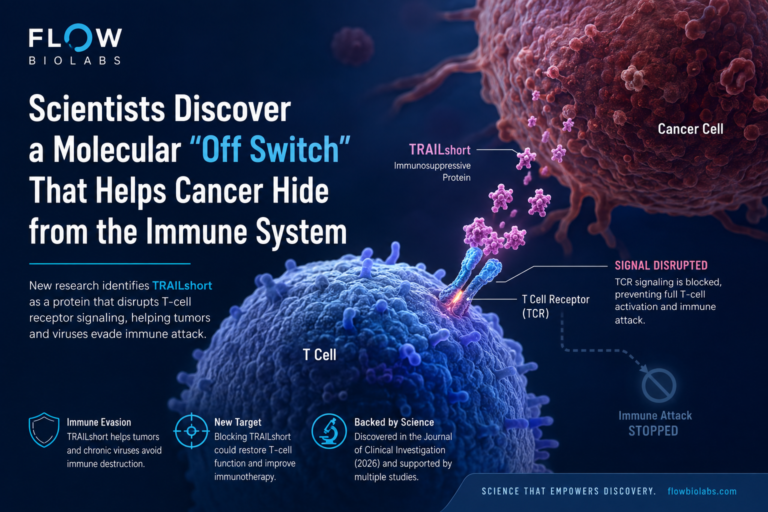
TRAILshort: The Protein That Helps Cancer Hide
Scientists have discovered that a protein called TRAILshort helps cancer cells evade the immune system by disrupting T-cell signaling. The discovery may open the door to new therapies that restore immune function and improve cancer immunotherapy.
-
Is the High-Protein Trend Secretly Aging Your Cells?
Protein is essential—but constantly flooding the body with amino acids may keep cells trapped in growth mode. New research explores how protein intake, mTOR, autophagy, activity level, and nutrient timing may influence cellular aging.
-
Why Your Health Plan Needs Regular Check-Ins
Short-term biological correction is only the beginning. Learn how phased protocol integration, biomarker tracking, recovery, and metabolic deloading can support long-term hormone balance, cellular resilience, and sustainable high performance.
-
Normal Labs, Low Energy? Here’s Why That Happens
Standard lab reference ranges are built to catch disease, not to tell you whether your hormones are working optimally at the cellular level. Here’s why “normal” TSH, testosterone, or estradiol can still leave you low-energy and foggy — and what’s actually worth doing about it.
-
The Female Endocrine Ceiling: Why “Normal” Lab Results Are Leaving Active Women Exhausted
Your labs came back “normal,” but you still feel exhausted, foggy, and off. Here’s why standard hormone reference ranges can miss what active women actually feel — and when it’s worth digging deeper with a qualified clinician.
-
Why Standard Lab Ranges Are Lying to Your Testosterone Levels (And How to Fix It)
Stop letting “normal” lab ranges hide your true potential. Discover why standard reference ranges fail men over 40 and how to optimize free testosterone with data-driven protocols.
-
Part 4: Cellular Synergies—The Vascular-Structural-Bioenergetic Triad
Explore how vascular access, cellular movement, and mitochondrial energy production work together in preclinical models to support multi-system tissue recovery.
-
Part 3: SS-31 & Mitochondrial Targeted Bioenergetics
Explore how SS-31 is studied for cardiolipin stabilization, mitochondrial architecture, ATP production, and cellular bioenergetics.
-
Part 2: TB-500 & Actin Cytoskeleton Regulation
Explore how TB-500 is studied for actin regulation, cellular migration, extracellular matrix remodeling, and coordinated tissue repair.
-
Part 1: BPC-157 & The Mechanisms of Angiogenesis and Tissue Blueprinting
Explore the cellular pathways through which BPC-157 is being studied for angiogenesis, microvascular signaling, endothelial migration, and tissue repair.
-
The Hidden Map of Body Fat (Part 4): How to Reduce Harmful Fat Without Destroying Your Metabolism
Reduce harmful visceral and liver fat without crash dieting. Learn how protein, resistance training, walking, sleep, and a sustainable calorie deficit protect muscle and improve metabolic health.
-
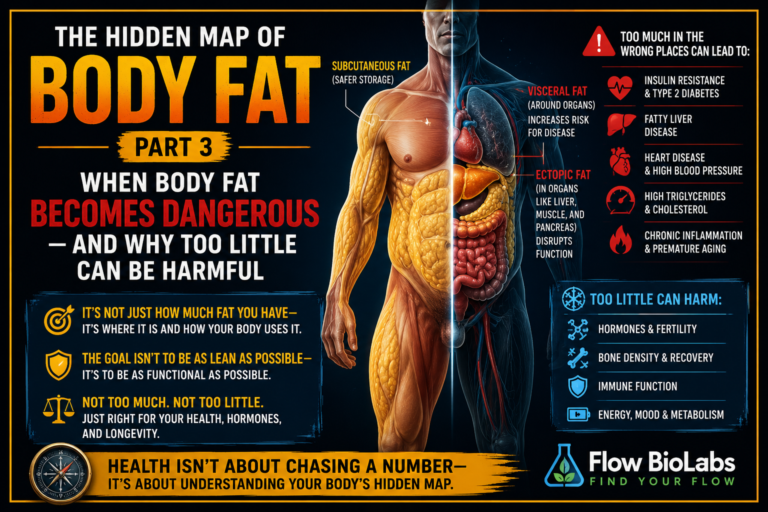
The Hidden Map of Body Fat (Part 3): When Body Fat Becomes Dangerous—and Why Too Little Can Be Harmful
Body fat becomes dangerous not simply when there is “too much,” but when safe storage areas become overwhelmed and fat begins accumulating around organs. Yet pushing body fat too low can also disrupt hormones, bones, energy, and recovery.
-
The Hidden Map of Body Fat (Part 2): The Seven Types of Body Fat—and Why Location Changes Everything
This is part of Flow BioLabs’ Feel Better Now path — see the full guide →. The Short Answer Not all body fat behaves the same way. Researchers classify fat by what it does (energy storage, heat production, hormone signaling) and by where it sits in the body (under the skin, deep in the abdomen,…
-
The Hidden Map of Body Fat (Part 1): Your Body Isn’t Getting Fat—It’s Solving a Storage Problem
This is part of Flow BioLabs’ Feel Better Now path — see the full guide →. The Short Answer Body fat isn’t a design flaw — it’s a highly organized, hormone-producing organ that your body relies on to store energy, protect organs, and survive periods without food. Fat gain happens when you take in more…
-
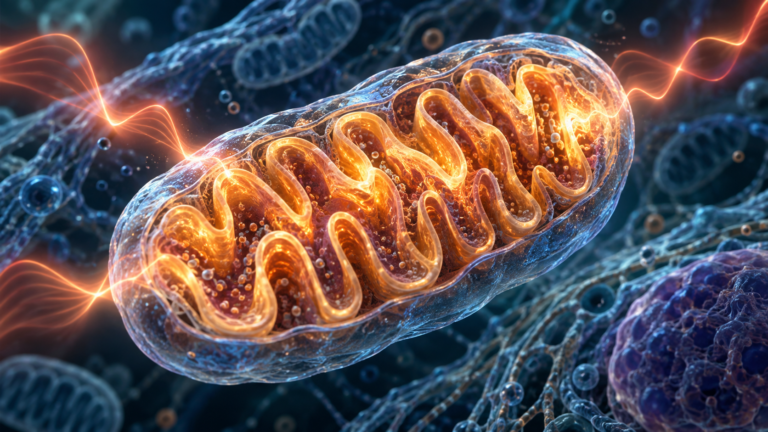
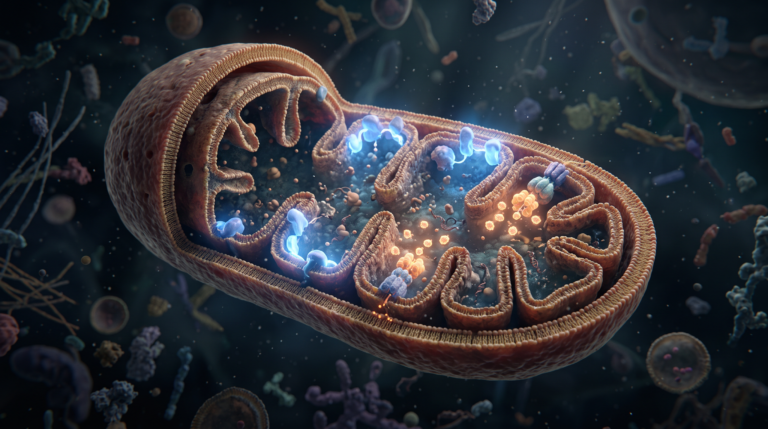
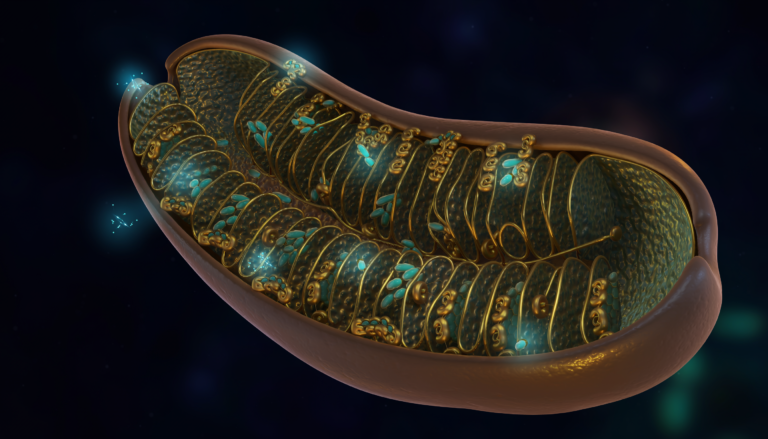
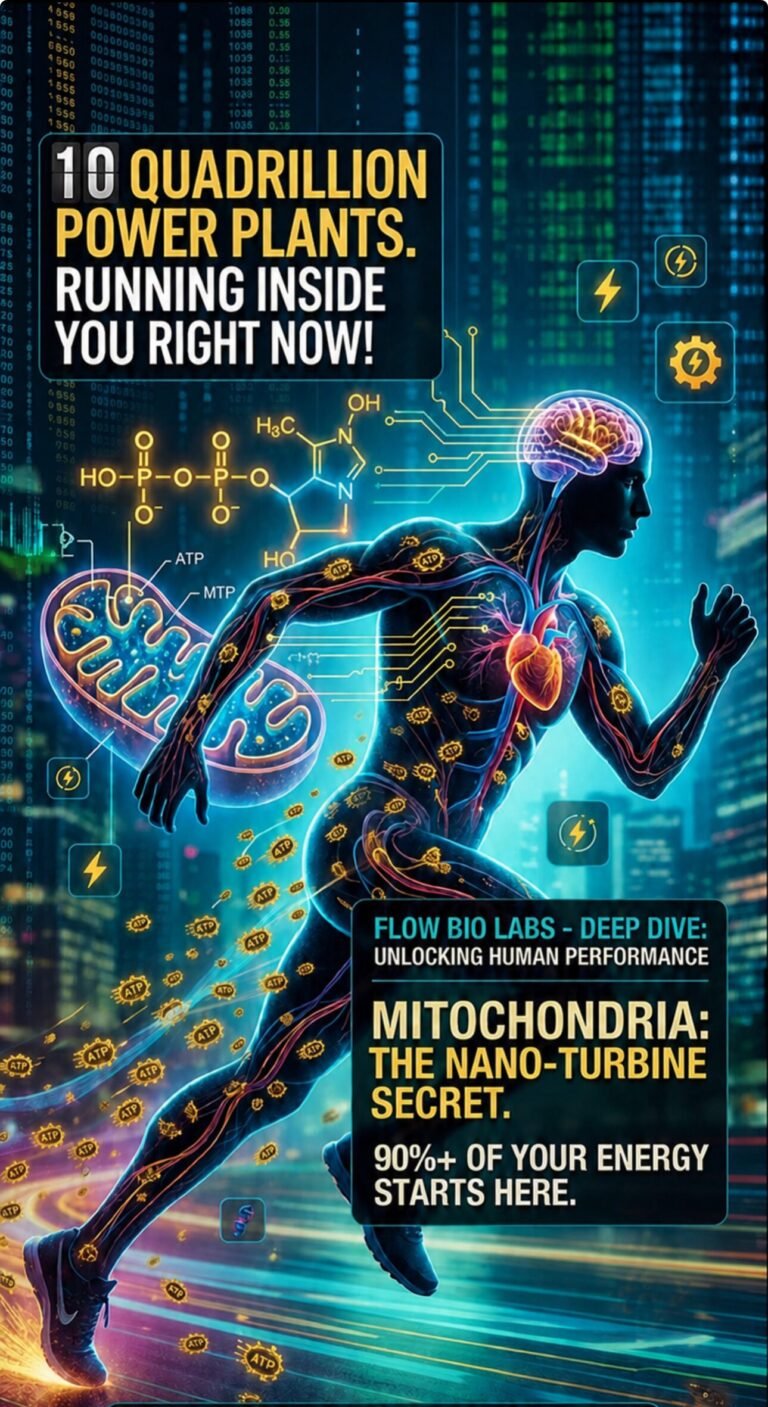
Trillions of Cellular Power Plants: Understanding Mitochondria and Bioenergetics
A clear, science-first guide to how mitochondria produce ATP, support performance, and respond to training, recovery, and metabolic signals.