
Sodium butyrate is the salt form of butyrate, a short-chain fatty acid your gut bacteria make every day when they ferment fiber. In lab and animal research, sodium butyrate shows protective effects on the brain, and the first small human studies of butyrate are now underway. Here is what the research shows, where it is strongest, and what is still being studied.
Key Takeaways
- Sodium butyrate is the sodium salt of butyrate, a short-chain fatty acid made when gut bacteria ferment dietary fiber.
- It acts as an HDAC inhibitor, a signal that switches protective gene programs back on.
- In cell and animal studies of Alzheimer’s, Parkinson’s, and Huntington’s disease, it lowered inflammation and oxidative stress and helped neurons survive.
- A 2025 human study in 14 people with Parkinson’s found a butyrate prodrug safe and confirmed with PET scans that butyrate reached the brain.
- The most reliable everyday way to support butyrate is feeding your gut bacteria fiber and resistant starch.
What Is Sodium Butyrate?
Butyrate is one of the main short-chain fatty acids your body produces. Your gut bacteria make it whenever they ferment fiber and resistant starch. Sodium butyrate is the sodium-salt form of butyrate, and it is the form most often used in research.
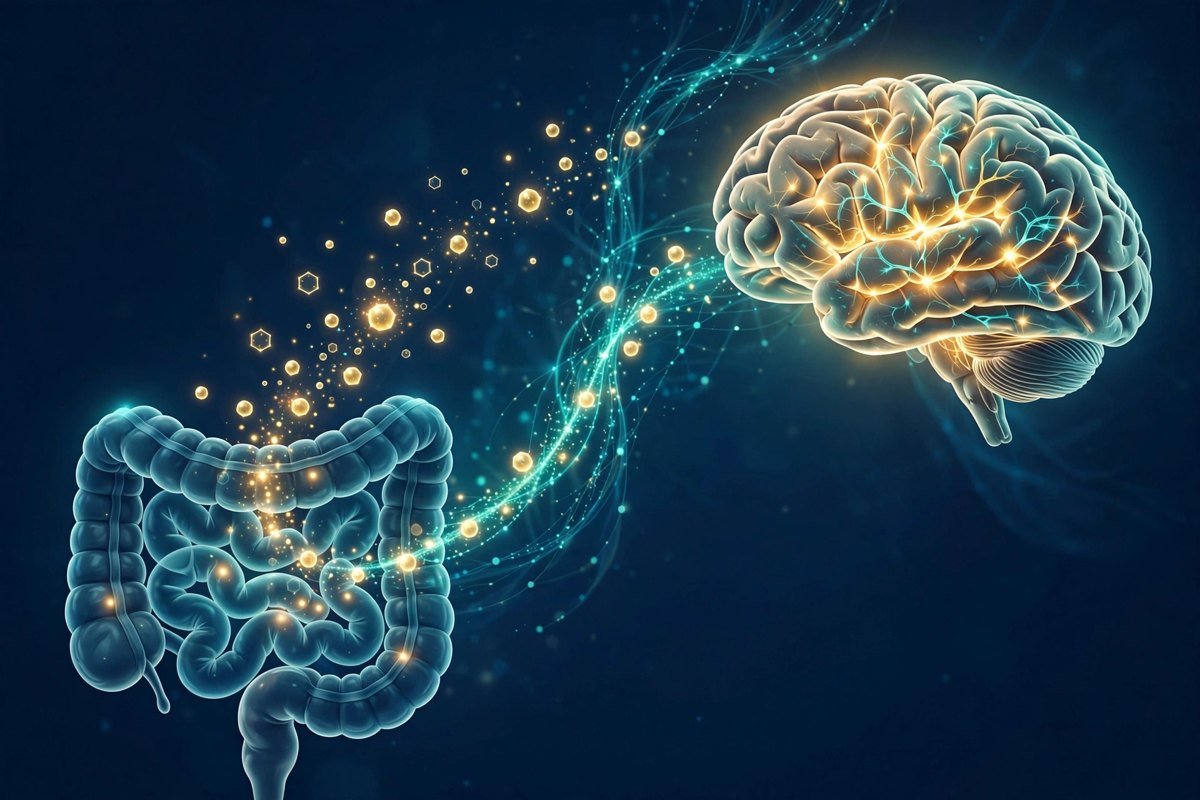
The body runs on processes, and signals start those processes. Butyrate is one of the key signals on the gut-brain axis: a molecule made in the gut that also influences the brain.
Butyrate also has a second job. It is a natural histone deacetylase (HDAC) inhibitor. HDACs are enzymes that keep certain genes switched off. Researchers have found HDACs are overactive in several brain conditions, which can keep protective genes silent. By inhibiting HDACs, butyrate helps switch those protective programs back on.
How Does Sodium Butyrate Protect the Brain?
A 2025 review in Molecular Neurobiology pulled together cell and animal research on sodium butyrate. It found anti-inflammatory, antioxidant, anti-apoptotic (cell-protecting), and neurotrophic (growth-supporting) effects, along with better cognitive, motor, and behavioral outcomes across many models of brain dysfunction (Rahmani et al., 2025). The reviewers also noted its ability to cross the blood-brain barrier and called for clinical trials to confirm the benefits in people.
In these studies, it worked through several signals at once:
- Calming neuroinflammation. It shifted the brain’s immune cells (microglia) away from an inflammatory state.
- Reducing oxidative stress. It lowered markers of oxidative damage and supported the cell’s own antioxidant defenses.
- Helping neurons survive. It reduced programmed cell death (apoptosis) in neurons under stress.
- Supporting growth factors. It raised levels of brain-derived neurotrophic factor (BDNF), which helps neurons survive and adapt.
Sodium Butyrate and Alzheimer’s Research
In a cell study, butyrate protected neurons against amyloid-beta, the protein fragment linked to Alzheimer’s. It improved cell survival, lowered reactive oxygen species, and worked through the GPR109A receptor (Sun et al., 2020).
In an Alzheimer’s mouse model, long-term treatment improved associative memory, even when it was started at an advanced stage of the disease. The memory gains tracked with higher histone acetylation in the hippocampus, the brain’s memory center (Govindarajan et al., 2011).
These are cell and animal results. Human trials of sodium butyrate for Alzheimer’s have not been done yet.
If you are noticing changes in focus or mental sharpness, our Fatigue, Focus and Metabolic Health guide walks through how to read those signals and when to bring the pattern to a licensed provider.
Butyrate and Parkinson’s Research
In mouse and cell models of Parkinson’s, butyrate protected against motor problems and nerve-cell loss. It reduced cell death, oxidative stress, and inflammation by calming the JAK2/STAT3 signaling pathway (Ji et al., 2023).
The research has now reached people. In a 2025 open-label study, 14 people with Parkinson’s took tributyrin, a butyrate prodrug, at 500 mg three times a day for about 30 days. The study found a reassuring safety profile with high adherence. PET scans in 10 participants confirmed changes in how much butyrate reached the brain and other organs. Researchers also saw anti-inflammatory effects and exploratory improvements in cognitive and motor features (Bohnen et al., 2025). The team concluded that larger, placebo-controlled trials are the next step.
Why tributyrin instead of plain sodium butyrate? The same study explains that oral sodium butyrate is used up quickly by colon cells, so little of it reaches the blood and brain. Tributyrin, a fat-based form found naturally in butter, is designed to get past that limit.
Sodium Butyrate and Huntington’s Research
Some of the earliest sodium butyrate research was in Huntington’s disease. In a Huntington’s mouse model, it extended survival in a dose-dependent way, improved body weight and motor performance, and delayed brain changes linked to the disease (Ferrante et al., 2003).
Later work found it also supports mitochondria in Huntington’s models. It restored the activity of pyruvate dehydrogenase, a key energy enzyme, raised brain energy levels, and improved motor learning and coordination in a second mouse model (Naia et al., 2017).
How Can You Support Healthy Butyrate Levels?
Your gut bacteria are your main butyrate factory, and fiber is their raw material. Feeding those bacteria well is the most reliable everyday way to support butyrate.
- Resistant starch: cooked-and-cooled potatoes, rice, and beans; green bananas; and oats.
- A wide range of plants: beans, lentils, whole grains, vegetables, fruits, nuts, and seeds. In the American Gut Project, people who ate more than 30 different plant types a week had more diverse gut bacteria than people who ate 10 or fewer (McDonald et al., 2018).
- Fermented foods: yogurt, kefir, sauerkraut, and kimchi support a healthy gut community. Our guide to fermented foods and gut health covers what the research shows.
- Butter and ghee: these contain small amounts of butyrate and tributyrin. Think of them as a small extra, not a replacement for fiber.
If your fiber intake is low, increase it gradually to avoid digestive discomfort. Our free Meal Builder helps you plan fiber-rich meals that fit your goals.
Go Deeper on the Gut-Brain Axis
Butyrate is one example of how a signal from the gut reaches the brain. Module 5 of The Signal Course, Inflammation and the Gut-Brain Axis, walks through how these signals work and the daily habits that support them.
Want to see which of your own signals needs attention first? Take the free Signal Map quiz. It takes about two minutes and organizes your patterns into a clear next step.
Frequently Asked Questions
What is sodium butyrate?
Sodium butyrate is the sodium-salt form of butyrate, a short-chain fatty acid made by gut bacteria when they ferment fiber. It acts as a natural HDAC inhibitor and has shown anti-inflammatory, antioxidant, and neuroprotective effects in lab and animal research.
Does sodium butyrate help with Alzheimer’s?
In cell studies and Alzheimer’s mouse models, it protected neurons against amyloid-beta and improved memory. Human trials for Alzheimer’s have not been done yet.
What does the research show for Parkinson’s and Huntington’s?
In Parkinson’s models, butyrate reduced nerve-cell loss, oxidative stress, and inflammation. A small 2025 human study of tributyrin in Parkinson’s confirmed butyrate reached the brain and found it safe, with early signs of cognitive and motor improvement. In Huntington’s mouse models, it extended survival and improved motor function.
Can I get butyrate from food?
Yes. Butter and ghee contain small amounts, but the main strategy is feeding your gut bacteria the fiber and resistant starch they turn into butyrate: beans, oats, cooled potatoes and rice, green bananas, and a wide range of plant foods.
Is sodium butyrate the same as a butyrate supplement?
Sodium butyrate is the supplement form used most in research. Plain oral sodium butyrate is used up quickly by colon cells, so researchers studying the brain have turned to forms like tributyrin. Human research on brain effects is still early.
Sources
- Rahmani D, Chodari L, Kakallahpour M, Niknam Z. Therapeutic Potential of Sodium Butyrate in Neurological and Psychiatric Disorders. Mol Neurobiol. 2025;63(1):90. doi:10.1007/s12035-025-05428-w
- Bohnen JLB, et al. Dietary tributyrin supplementation in Parkinson’s disease: an open-label target engagement study. Neurotherapeutics. 2025;23(1):e00791. doi:10.1016/j.neurot.2025.e00791
- Sun J, et al. Sodium Butyrate Protects N2a Cells against Aβ Toxicity In Vitro. Mediators Inflamm. 2020;2020:7605160. doi:10.1155/2020/7605160
- Govindarajan N, et al. Sodium butyrate improves memory function in an Alzheimer’s disease mouse model when administered at an advanced stage of disease progression. J Alzheimers Dis. 2011;26(1):187-97. doi:10.3233/JAD-2011-110080
- Ji LL, et al. The gut microbiota metabolite butyrate mitigates MPTP/MPP+-induced Parkinson’s disease by inhibiting the JAK2/STAT3 signaling pathway. Kaohsiung J Med Sci. 2023;39(10):1002-1010. doi:10.1002/kjm2.12745
- Ferrante RJ, et al. Histone deacetylase inhibition by sodium butyrate chemotherapy ameliorates the neurodegenerative phenotype in Huntington’s disease mice. J Neurosci. 2003;23(28):9418-27. doi:10.1523/JNEUROSCI.23-28-09418.2003
- Naia L, et al. Histone Deacetylase Inhibitors Protect Against Pyruvate Dehydrogenase Dysfunction in Huntington’s Disease. J Neurosci. 2017;37(10):2776-2794. doi:10.1523/JNEUROSCI.2006-14.2016
- McDonald D, et al. American Gut: an Open Platform for Citizen Science Microbiome Research. mSystems. 2018;3(3):e00031-18. doi:10.1128/mSystems.00031-18
This article is for education only and is not medical advice. If you are considering any supplement, or if you have a neurological condition, talk with a licensed provider first. Explore more in My Library.