
This is part of Flow BioLabs’ Feel Better Now path — see the full guide →.
The Short Answer
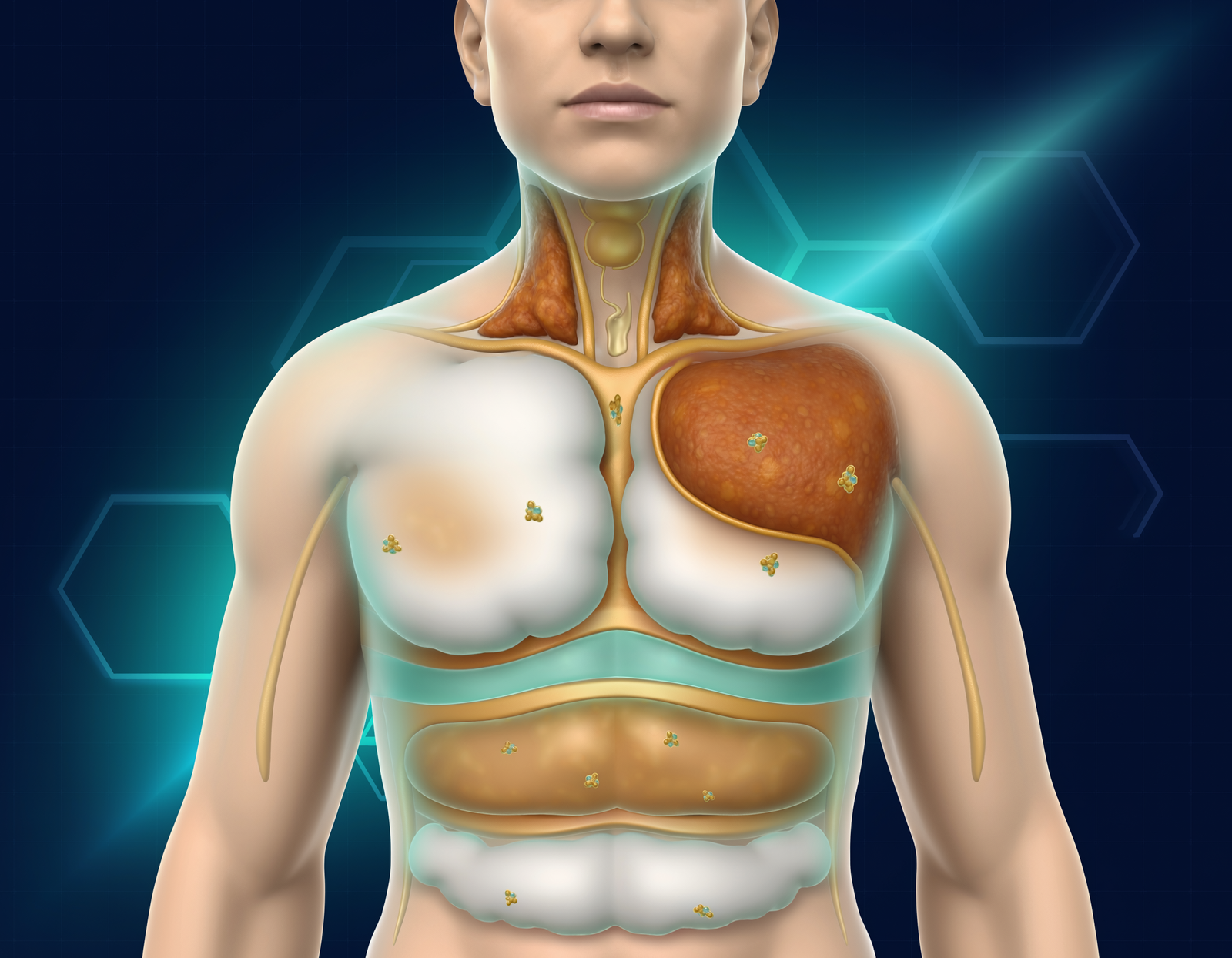
Not all body fat behaves the same way. Researchers classify fat by what it does (energy storage, heat production, hormone signaling) and by where it sits in the body (under the skin, deep in the abdomen, or inside organs). The location matters enormously: fat stored just beneath the skin is generally the body’s safest storage compartment, while fat stored deep in the abdomen (visceral fat) or inside organs like the liver and muscle (ectopic fat) is far more strongly linked to insulin resistance, fatty liver disease, and cardiovascular risk (Pedley et al., 2013, JACC Cardiovascular Imaging). That is why two people can carry the same body weight and body-fat percentage yet face very different long-term health outcomes.
Key Takeaways
- Fat tissue can be classified by function (what it does) and by location (where it’s stored).
- White fat stores energy and acts as an endocrine organ, releasing hormones like leptin and adiponectin.
- Brown and beige fat can burn fuel to generate heat rather than store it.
- Essential fat is the minimum amount the body needs for normal hormone, nerve, and organ function.
- Subcutaneous fat sits under the skin and is generally the body’s safest large storage depot.
- Visceral fat surrounds internal organs deep in the abdomen and is strongly linked to metabolic disease.
- Ectopic fat builds up inside organs and tissues that were never meant to store large amounts of fuel, and is associated with insulin resistance.
One Body, Multiple Fat Systems
In Part 1, we established that body fat is a living, hormone-producing organ your body relies on to store surplus energy. That raises the next question: where does the body actually put that stored energy?
There’s no single official scientific list called “the seven types of body fat.” Researchers classify adipose tissue in overlapping ways — by cell type and function, and by anatomical location (Endotext, adipose tissue physiology). To make the science easier to apply, this guide groups fat into seven practical categories: white fat, brown fat, beige fat, essential fat, subcutaneous fat, visceral fat, and ectopic fat. These categories overlap — for example, most subcutaneous fat is made of white fat cells — but understanding each one clarifies why fat location changes health risk so dramatically.
1. White Fat — The Storage Battery
White fat is what most people picture when they hear “body fat.” Its primary role is storing surplus energy as triglycerides for later use. But white fat is not a passive warehouse — it functions as an endocrine organ, releasing hormones and signaling proteins that communicate with the brain, liver, muscles, immune system, and reproductive system (Coelho, Fernandes & Oliveira, 2013, Archives of Medical Science).
One of its key hormones is leptin, which signals to the brain how much energy is currently stored; leptin levels generally rise as fat mass increases, and the brain uses this signal as part of appetite and energy regulation (Leptin as a key regulator of the adipose organ, 2022). White fat also produces adiponectin, a hormone involved in insulin sensitivity — the body’s ability to respond efficiently to insulin and manage blood sugar (Adiponectin, Leptin, and Fatty Acids in Metabolic Homeostasis). Healthy white fat serves an important purpose; problems tend to begin when fat cells become severely enlarged, inflamed, or resistant to insulin’s signals.
2. Brown Fat — The Metabolic Furnace
Brown fat works differently from white fat: instead of mainly storing energy, it burns fuel to generate heat. Its darker color comes from a high concentration of mitochondria — the structures inside cells that convert fuel into usable energy. Brown fat is especially abundant in infants, who cannot regulate body temperature as efficiently as adults, and adults typically retain smaller amounts around the neck, shoulders, and spine.
When activated by cold exposure, brown fat draws in glucose and fatty acids and converts that fuel into heat through non-shivering thermogenesis. It’s a genuinely interesting metabolic tool, but it is not a shortcut around chronic overeating, inactivity, or muscle loss — most adults carry relatively small amounts of it (Yoon, Cho & An, 2023, Diabetes & Metabolism Journal).
3. Beige Fat — The Convertible Cell
Beige fat cells sit between white and brown fat. They can appear within white fat tissue and, under repeated cold exposure or certain forms of physical activity, can develop more mitochondria and begin burning additional fuel for heat — a process sometimes called “browning.” This transformation isn’t necessarily permanent; beige cells may revert toward typical white-fat behavior once the activating signal disappears.
Researchers are interested in beige fat because it may help explain individual differences in energy use and metabolic flexibility, but it remains a supporting player rather than a substitute for nutrition, movement, resistance training, and sleep (Yoon, Cho & An, 2023).
4. Essential Fat — The Non-Negotiable Baseline
Essential fat isn’t a separate tissue type; it’s the minimum amount of fat the body needs to function. It’s found in the brain, central nervous system, bone marrow, cell membranes, internal organs, and reproductive tissues, where it helps protect nerves, cushion organs, and support hormone production.
Trying to eliminate all body fat doesn’t make someone healthier — it becomes dangerous. When body-fat levels fall too low, the body may reduce reproductive hormone production, thyroid activity, immune function, and energy expenditure. In women, very low body fat or prolonged energy deficiency can disrupt menstrual cycles and lower estrogen; in men, it can reduce testosterone, impair recovery, and contribute to muscle loss (Relative Energy Deficiency in Sport (RED-S) review, 2022). We cover this in more depth in Part 3.
5. Subcutaneous Fat — The Pinchable Layer
Subcutaneous fat sits directly beneath the skin — the soft layer you can pinch around the abdomen, hips, thighs, and arms. It’s the fat that receives the most cosmetic attention, but from a metabolic standpoint, it’s generally the body’s safest major storage compartment.
When subcutaneous fat cells remain healthy and responsive to insulin, they absorb excess energy and keep it away from riskier locations, acting as a metabolic buffer (Pedley et al., 2013, JACC Cardiovascular Imaging). That doesn’t mean unlimited amounts are harmless — very large amounts can still increase joint stress, limit mobility, and worsen sleep apnea. But compared with visceral and ectopic fat, subcutaneous fat is generally less strongly associated with insulin resistance and cardiovascular disease. Location matters here too: fat stored around the hips and thighs tends to behave differently from fat stored in the upper abdomen.
6. Visceral Fat — The Deep Abdominal Fat
Visceral fat is stored deep inside the abdominal cavity, surrounding organs like the liver, stomach, and intestines. Unlike subcutaneous fat, it can’t be pinched because it sits behind the abdominal muscles.
Visceral fat is more metabolically active than most subcutaneous fat — it releases fatty acids and inflammatory signals in close proximity to the liver. Excess visceral fat is strongly associated with insulin resistance, type 2 diabetes, high blood pressure, unhealthy blood-lipid levels, fatty liver disease, and cardiovascular disease (clinical review of visceral adiposity, PMC). Notably, someone can appear relatively thin and still carry high levels of visceral fat — sometimes described as “thin on the outside, fat on the inside” — while a larger-bodied person who stores more fat subcutaneously may have better blood-sugar control (risk for metabolic disease in normal-weight individuals with visceral fat, 2017, BMJ Open). This doesn’t make body weight meaningless — it means the number on a scale doesn’t tell the whole story.
7. Ectopic Fat — The Organ Infiltrator
Ectopic fat is fat stored in an abnormal location — inside organs and tissues that were never designed to serve as long-term fuel-storage depots. Common sites include the liver, pancreas, skeletal muscle, and heart.
When fat accumulates inside the liver, it can interfere with the liver’s ability to regulate glucose and process fats. When it builds up in skeletal muscle, it can disrupt insulin signaling and reduce the muscle’s ability to absorb glucose efficiently. Fat around or within the pancreas may also interfere with normal metabolic function (Ectopic Fat and Insulin Resistance, 2012). Ectopic fat is often a sign that the body’s safer storage system — subcutaneous fat — is becoming overwhelmed, and the excess energy is spilling into tissues where it interferes with normal function rather than simply taking up space (Gill & Sattar, 2014, BMC Medicine).
Why Location Can Matter More Than Appearance
Imagine two people who both weigh 210 pounds. The first stores most of their excess fat beneath the skin, particularly around the hips and thighs. The second stores more fat deep in the abdomen and within the liver. Their scales may show the same number, but their metabolic health can be very different — the second person may face a meaningfully greater risk of insulin resistance, fatty liver disease, high blood pressure, and cardiovascular problems, even while appearing smaller (Jackson Heart Study, 2010, Journal of Clinical Endocrinology & Metabolism).
This is why a thorough health assessment usually includes more than body weight: waist circumference, blood pressure, fasting glucose, hemoglobin A1C, triglycerides, HDL cholesterol, liver enzymes, muscle mass, activity level, sleep quality, and family history all add context that the scale alone cannot provide.
The Real Goal: Healthy Storage, Not Zero Fat
Your body needs fat — white fat to store energy, essential fat to protect vital systems, and some brown and beige fat activity to help regulate temperature and energy use. The goal isn’t to eliminate body fat; it’s to preserve healthy storage capacity while preventing excessive accumulation in higher-risk areas like the visceral and ectopic compartments.
That means supporting the systems that help the body manage energy safely: building and maintaining muscle, moving regularly, sleeping consistently, eating mostly nutrient-dense foods, avoiding chronic energy excess, supporting insulin sensitivity, and managing stress. Healthy body composition isn’t a contest to become as lean as possible — it’s a question of whether the body can safely store, release, and use energy without damaging the tissue around it.
Fat-Cell Size and Number Both Shape Metabolic Risk
How fat tissue expands also affects how safely it functions. Existing fat cells can enlarge (hypertrophy) or the body can generate new fat cells (hyperplasia) to spread the load. Fat tissue that expands mainly through extreme enlargement of existing cells tends to develop poorer blood flow, more inflammation, and reduced insulin responsiveness compared with tissue that can recruit new cells (Kahn, Wang & Lee, 2019, Journal of Clinical Investigation). This helps explain why two people with the same total body-fat percentage can have very different metabolic profiles — the size and health of individual fat cells matters, not just the total volume of fat.
Sex, Age, and Genetics Influence Where Fat Goes
Fat distribution isn’t purely a matter of choice or diet — it’s shaped by sex hormones, genetics, age, and life stage. Before menopause, estrogen tends to favor lower-body subcutaneous fat storage over visceral accumulation; after menopause, declining estrogen is often accompanied by a shift toward more abdominal and visceral fat (Xu, Kwok & Lam, 2016). Men, on average, carry less total body fat than women but tend to store a larger proportion of it viscerally. Neither pattern is a personal failing — they reflect underlying biology that influences, but doesn’t fully determine, long-term health outcomes.
Frequently Asked Questions
What is the difference between subcutaneous and visceral fat?
Subcutaneous fat sits directly under the skin and is generally the body’s safer storage compartment. Visceral fat sits deep in the abdominal cavity around internal organs and is more metabolically active, releasing inflammatory signals that are strongly linked to insulin resistance, fatty liver disease, and cardiovascular risk (Pedley et al., 2013).
Can you be thin and still have unhealthy fat levels?
Yes. A person can appear lean while carrying excess visceral or ectopic fat — sometimes called being “thin on the outside, fat on the inside” — which still raises metabolic risk (BMJ Open, 2017).
What is ectopic fat?
Ectopic fat is fat stored inside organs and tissues — such as the liver, pancreas, muscle, or heart — that weren’t designed to serve as major fuel-storage depots. It’s associated with insulin resistance and metabolic dysfunction (Ectopic Fat and Insulin Resistance, 2012).
What is essential fat and why do I need it?
Essential fat is the minimum amount of fat needed to support the brain, nerves, hormones, organs, and reproductive system. Falling below this threshold can disrupt hormone production, immune function, and bone health (RED-S review, 2022).
Does brown fat help you burn more calories?
Brown and beige fat can burn fuel to produce heat, but most adults carry relatively small amounts. It may modestly support metabolic flexibility, but it isn’t a substitute for the fundamentals of nutrition, movement, and sleep (Yoon, Cho & An, 2023).
Coming Next
Some body fat protects you. Some becomes dangerous when too much accumulates in the wrong location. And having too little body fat creates problems of its own. In Part 3, we compare the risks of too much fat with the risks of too little, and explain why healthy body composition is about balance, not extremes.
Want to go deeper? The 21-Day Metabolic Friction Reset is a day-by-day, 21-day plan for removing the everyday friction behind stalled progress. See the program →