
The push-up test may be one of the simplest ways to get a rough read on your heart health at home. In a 10-year study of more than 1,100 active men, those who could complete 40 or more push-ups had a 96% lower risk of cardiovascular events than those who could do fewer than 10. Push-ups are not magic, but they reflect muscular fitness, and fitness is one of the strongest predictors of long-term health.
Quick Answer
- Men who could do 40+ push-ups had 96% lower heart disease risk over 10 years than those who did fewer than 10.
- Push-ups reflect muscular fitness, which is closely linked with heart health and longevity.
- Just 30 to 60 minutes a week of strength training was linked with 10% to 20% lower risk of death.
- Anyone can start with wall or counter push-ups and build up.

What Did the Push-Up Study Find?
Researchers from Harvard followed 1,104 male firefighters, average age 40, for about 10 years. At the start, each man did as many push-ups as he could in time with a metronome. Over the next decade, those who completed more than 40 push-ups had a 96% lower risk of heart disease events, such as heart attack or heart failure, than those who did fewer than 10. Push-up capacity predicted risk better than a treadmill test in this group (Yang et al., JAMA Netw Open, 2019).
The study involved active, middle-aged men, so results may not apply to women, older adults or less active people. It also shows an association, not proof that push-ups themselves prevent heart disease.
Why Does Muscular Fitness Matter for the Heart?
Push-ups test upper-body strength and endurance, but they also reflect overall fitness, body composition and how often someone exercises. Fitter muscles use glucose better, support healthy blood pressure, and make daily activity easier, which keeps people moving.
Grip strength tells a similar story. In a study of nearly 140,000 adults across 17 countries, every 5-kilogram drop in grip strength was linked with a 16% higher risk of death from any cause and a 17% higher risk of cardiovascular death (Leong et al., Lancet, 2015).
How Much Strength Training Do You Need?
You do not need hours in the gym. A meta-analysis of 16 studies found that 30 to 60 minutes a week of muscle-strengthening activity was associated with a 10% to 20% lower risk of death from any cause, heart disease and cancer. Combining strength work with aerobic activity was linked with the greatest benefit (Momma et al., Br J Sports Med, 2022).
Cardiorespiratory fitness matters too. A large meta-analysis found that each step up in aerobic fitness was associated with about 13% lower risk of death and 15% lower risk of heart disease events (Kodama et al., JAMA, 2009). Strength and endurance work best together.
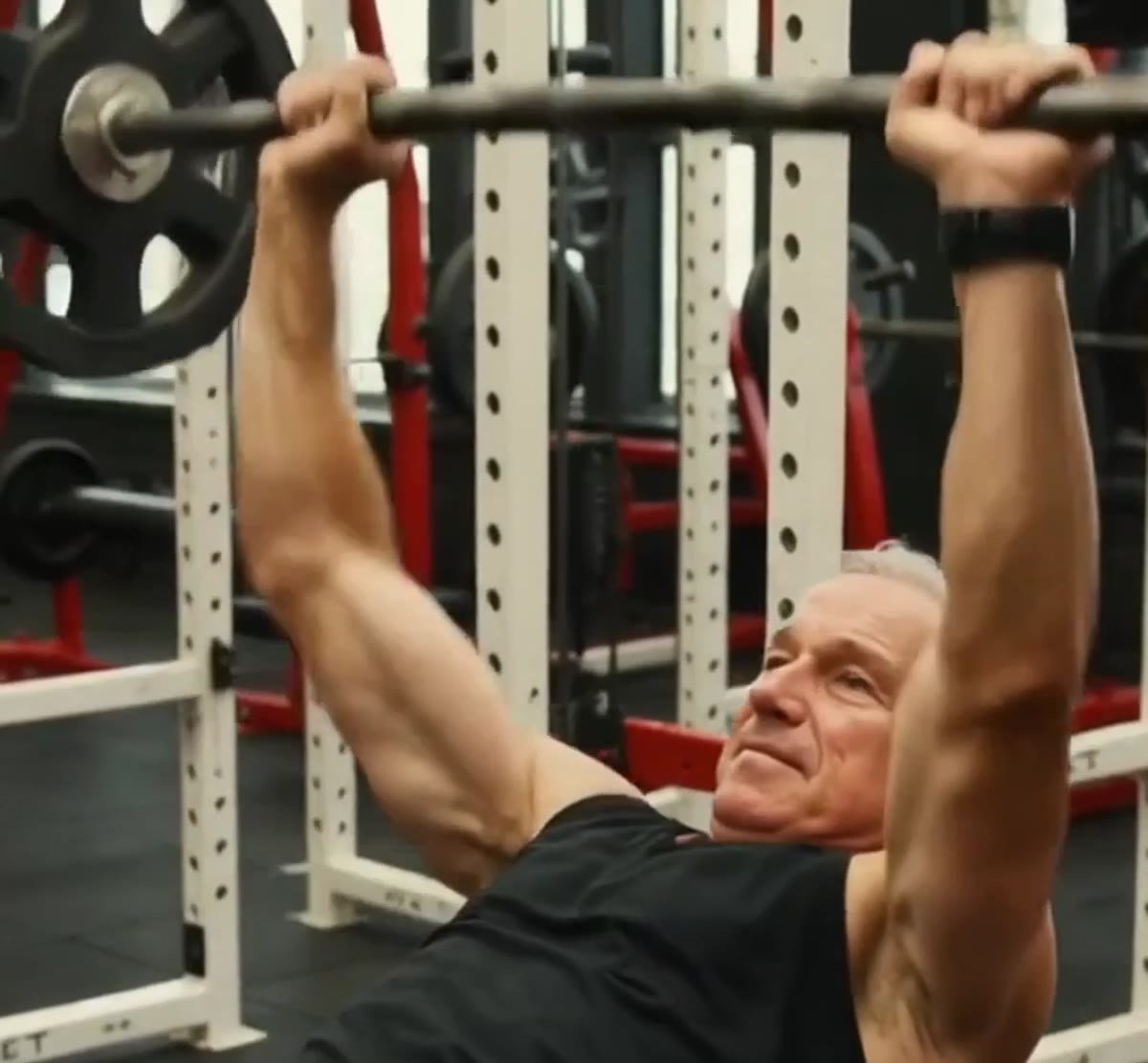
How Do You Do the Push-Up Test at Home?
- Warm up with a few minutes of easy movement.
- Get into a standard push-up position with hands shoulder-width apart and body in a straight line.
- Lower your chest until elbows reach about 90 degrees, then push back up.
- Count how many good-form push-ups you can do without stopping.
- Write the number down and retest every four to six weeks.
If you have heart disease, high blood pressure, shoulder problems or have been inactive, check with your clinician first. The goal is a baseline, not a maximum effort that causes strain.
What Are Researchers Exploring Next?
Only one major study has linked push-up counts directly to heart outcomes, and it included only men. The number of push-ups is best seen as one fitness marker among many, alongside walking pace, grip strength, blood pressure and cholesterol.
5 Ways to Build Push-Up Strength
- Start where you are. Wall or counter push-ups are a great first step.
- Practice two or three times a week. Do a few sets, stopping one or two reps short of failure.
- Lower the angle gradually. Move from counter to bench to floor as you get stronger.
- Train the whole body. Squats, rows and step-ups balance your routine. Our guide on why strength training matters more after 40 explains why.
- Pair it with walking. Aerobic fitness adds to strength benefits. See walking speed and lifespan.
Other simple self-tests can be revealing too, such as how long you can balance on one leg. Want to see which body system to focus on first? Try the free Signal Map quiz.
Frequently Asked Questions
How many push-ups should I be able to do?
There is no single standard, but in a 10-year study of middle-aged men, those who could do 40 or more push-ups had far lower heart disease risk than those who managed fewer than 10. What matters most is improving from your own starting point.
Is the push-up test accurate for heart health?
It is a simple, free estimate of muscular fitness, which is linked with heart health. It is not a medical test and cannot replace a clinician’s evaluation, but it is a useful way to track your fitness over time.
What if I can’t do a regular push-up?
Start with wall push-ups or push-ups on a kitchen counter or bench, then move lower as you get stronger. Knee push-ups are another good step.
Ready to take the next step? The 21-Day Metabolic Friction Reset is a simple, day-by-day plan for movement, meals and sleep habits that support healthier metabolism. See the program →
Sources
- Yang J, et al. Association between push-up exercise capacity and future cardiovascular events among active adult men. JAMA Netw Open. 2019;2(2):e188341. doi:10.1001/jamanetworkopen.2018.8341
- Leong DP, et al. Prognostic value of grip strength: findings from the Prospective Urban Rural Epidemiology (PURE) study. Lancet. 2015;386(9990):266-273. doi:10.1016/S0140-6736(14)62000-6
- Momma H, et al. Muscle-strengthening activities are associated with lower risk and mortality in major non-communicable diseases: a systematic review and meta-analysis of cohort studies. Br J Sports Med. 2022;56(13):755-763. doi:10.1136/bjsports-2021-105061
- Kodama S, et al. Cardiorespiratory fitness as a quantitative predictor of all-cause mortality and cardiovascular events in healthy men and women: a meta-analysis. JAMA. 2009;301(19):2024-2035. doi:10.1001/jama.2009.681
This article is for education only and is not medical advice. Talk with your healthcare professional before changing your health routine.