This is part of Flow BioLabs’ Recover & Perform path — see the full guide →.
The short answer: Tissue repair isn’t a single event — it depends on three things happening together: blood flow reaching the injury (vascularization), repair cells physically moving to the site (cell motility), and those cells having enough energy to do the work (mitochondrial bioenergetics). In preclinical research, three investigational peptides are each studied for a different piece of this puzzle: BPC-157 for blood vessel growth, TB-500 for cell movement, and SS-31 for cellular energy support. No study has tested these three together in a controlled human trial — the “triad” framework is a way of organizing what’s known about each mechanism individually, not a proven combined therapy.
The Biological Pathway: An Integrated Physiological Lens
Tissue repair research is often organized around three complementary pillars of physiology: how blood and nutrients reach an injury (vascularization), how repair cells travel to the site (structural cell migration), and how those cells power the actual rebuilding work (cellular bioenergetics). Real tissue repair depends on these systems working in sync rather than in isolation — a disruption in any one area can create a bottleneck that limits the overall pace of recovery. This is a well-established principle in wound-healing physiology generally (Sikiric et al., 2019, Gut and Liver), even though the specific combination of investigational peptides discussed below has not been studied as a unit.
Pillar One: Vascular Access and Micro-Circulation
Preclinical research on BPC-157 indicates that it influences receptor expression — specifically VEGFR2, a receptor involved in new blood vessel formation — and local nitric oxide signaling to support vascular development in animal models (Regeneration or Risk? A Narrative Review of BPC-157, 2025). These vascular pathways matter because oxygen, nutrients, and signaling molecules all travel through blood vessels to reach injured tissue. Without adequate micro-circulation, even well-coordinated repair activity can be limited by the reduced movement of materials into and out of the tissue environment. It’s worth repeating that this evidence comes almost entirely from rodent studies — a 2025 systematic review found only one small, uncontrolled human study among 544 BPC-157 papers screened (Vasireddi et al., 2025, HSS Journal).
Pillar Two: Cytoskeletal Organization and Cell Motility
Laboratory studies on Thymosin Beta-4 (the protein TB-500 is derived from) suggest it regulates actin — the structural protein that gives cells their shape — enabling repair cells like fibroblasts and endothelial cells to navigate through tissue and reach injury sites (Xu et al., 2021, Frontiers in Endocrinology). The cytoskeleton (a cell’s internal structural framework) allows cells to change shape, establish direction, and physically move through the extracellular environment — the mesh of proteins surrounding cells. This mobility matters because repair cells must not just be present near an injury, but able to travel through tissue and organize themselves where structural support is needed. As with BPC-157, the strongest data here involves full-length Thymosin Beta-4 in animal and limited human wound trials — not the shorter TB-500 fragment specifically, which has no published human trials of its own.
Pillar Three: Mitochondrial Bioenergetic Support
Research on SS-31 (elamipretide) shows it concentrates selectively in the inner mitochondrial membrane, binding a lipid called cardiolipin to help stabilize the structures responsible for producing ATP — the molecule cells use as their main energy currency (Drug Discov Ther, 2026). ATP powers nearly every resource-intensive repair process: cell signaling, movement, protein synthesis, and membrane maintenance. By supporting this bioenergetic layer, mitochondrial function may help ensure that vascular and structural repair activity isn’t limited by inadequate cellular energy. Notably, SS-31/elamipretide is the most clinically advanced of the three: it received accelerated approval in September 2025 as FORZINITY, specifically for Barth syndrome, a rare mitochondrial disease — though that approval doesn’t extend to general recovery or performance use (Barth Syndrome Foundation, 2025).
Why the Three Pillars Matter Together
Recovery from significant tissue stress isn’t dependent on a single signal or isolated pathway — it requires several systems operating in sequence and in parallel. Vascular access, cellular movement, and mitochondrial energy production each contribute a distinct function, and general wound-healing physiology supports the idea that these functions become more effective when they’re coordinated (Sikiric et al., 2019).
Coordinated Tissue Remodeling
Effective structural repair requires cellular movement and localized blood flow, both of which depend on an uninterrupted cellular energy supply. Blood flow provides access to the tissue environment, mobile cells carry out the structural work, and mitochondrial energy supports the activity those cells need to move, communicate, and participate in remodeling. This is a general principle of tissue biology, not something demonstrated specifically for the combination of BPC-157, TB-500, and SS-31 together.
Preventing Systemic Bottlenecks
Addressing only one piece of the puzzle — for example, promoting blood flow without adequate cellular energy — could theoretically leave tissue recovery incomplete. This logic is grounded in how the underlying physiology works, but it’s important to be clear: no clinical trial has tested whether combining BPC-157, TB-500, and SS-31 produces better outcomes than any one alone, or whether combining investigational peptides carries additional risk. This is a conceptual framework for understanding the biology, not a validated protocol.
The Plain-English Breakdown: The Interconnected Recovery Grid
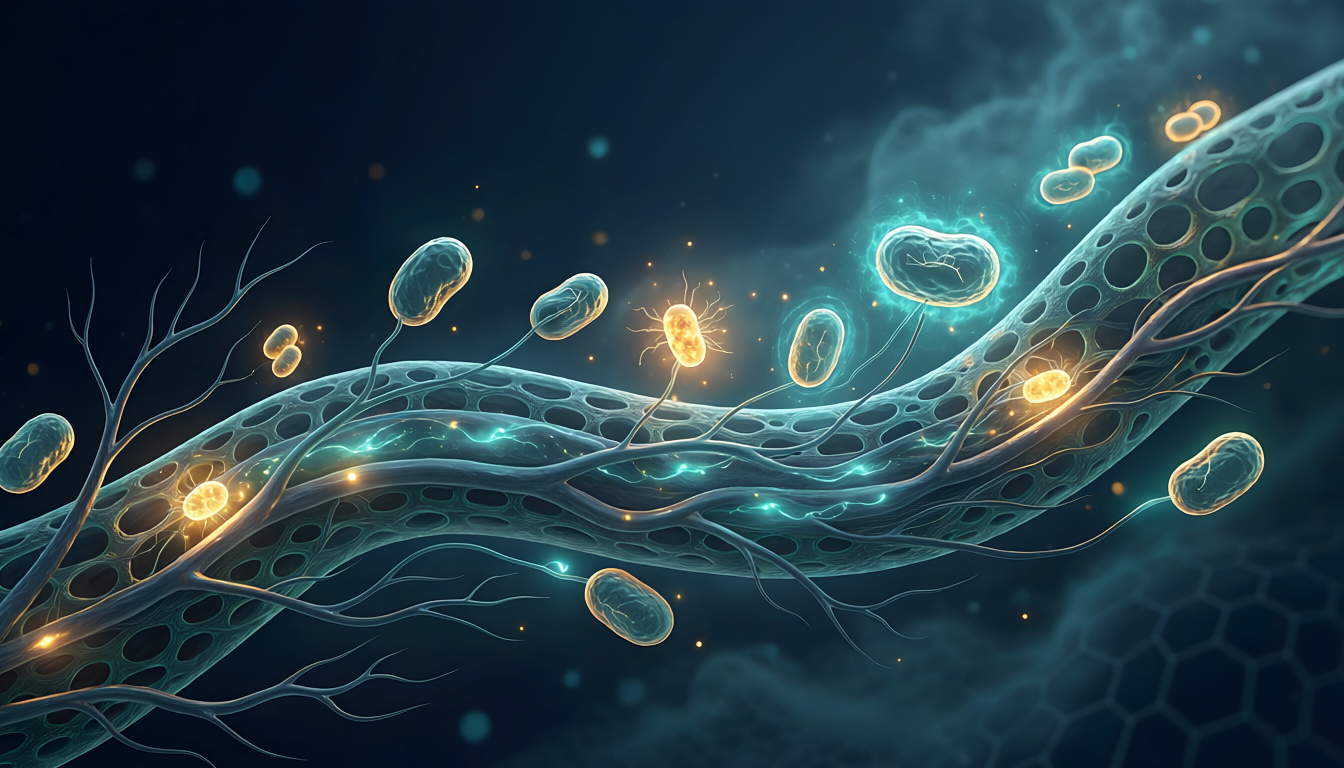
Picture a major recovery operation running on three tightly linked systems. Each has a distinct job, and none can finish the work alone.
The Delivery Infrastructure
Micro-vessels and nutrient delivery routes — the process BPC-157 is studied for in animal models — function like roads and loading docks, letting oxygen, nutrients, and signaling molecules reach the work zone.
The Mobile Workforce
Specialized repair cells, whose movement is linked to the actin-regulating mechanisms studied with TB-500/Thymosin Beta-4, act like trained workers navigating a complex construction site to reach the exact point of injury.
The Power Generation Grid
Mitochondria, supported in preclinical models by compounds like SS-31, supply the energy that keeps the whole operation running — from cellular movement to structural synthesis. Without reliable energy generation, the other two systems may be present but unable to perform demanding repair work.
The Bottom Line on the Triad Framework
This three-pillar model is a useful way to organize the biology of tissue repair, and each individual mechanism has real (mostly preclinical) research behind it. But treat it as an educational framework, not a clinically validated stack.
Frequently Asked Questions
Do BPC-157, TB-500, and SS-31 work better when combined?
This hasn’t been tested. Each peptide has been studied individually, mostly in animals, for a different proposed mechanism. No controlled trial has evaluated whether combining them improves outcomes compared with using one alone, or whether combining investigational compounds introduces additional risk.
Why does tissue repair need blood flow, cell movement, and energy all at once?
Because they serve different, non-substitutable functions. Blood flow delivers raw materials; cell movement gets the right repair cells to the injury site; and cellular energy (ATP, produced by mitochondria) powers the actual work of rebuilding. A shortfall in any one area can slow the entire process.
Is the “triad” concept scientifically established?
The underlying principle — that vascularization, cell motility, and bioenergetics are all necessary for tissue repair — is well established in general physiology. Researchers are still testing whether these three specific investigational peptides, used together, support all three pillars in humans.
Educational Disclaimer
This article is for educational and scientific-communication purposes only and is not medical advice. No medical claims are implied, intended, or expressed. If you’re considering any peptide therapy, talk with your own licensed healthcare provider first, and use our free Peptide Calculator to sanity-check dosing and reconstitution math before you start.
Want to go deeper? The Flow BioLabs Recovery Stack is all three systems in sequence: Deep Sleep Rebuild, Metabolic & Mitochondrial Optimization, and Lab Interpretation. See the program →