
This is part of Flow BioLabs’ Recover & Perform path — see the full guide →.
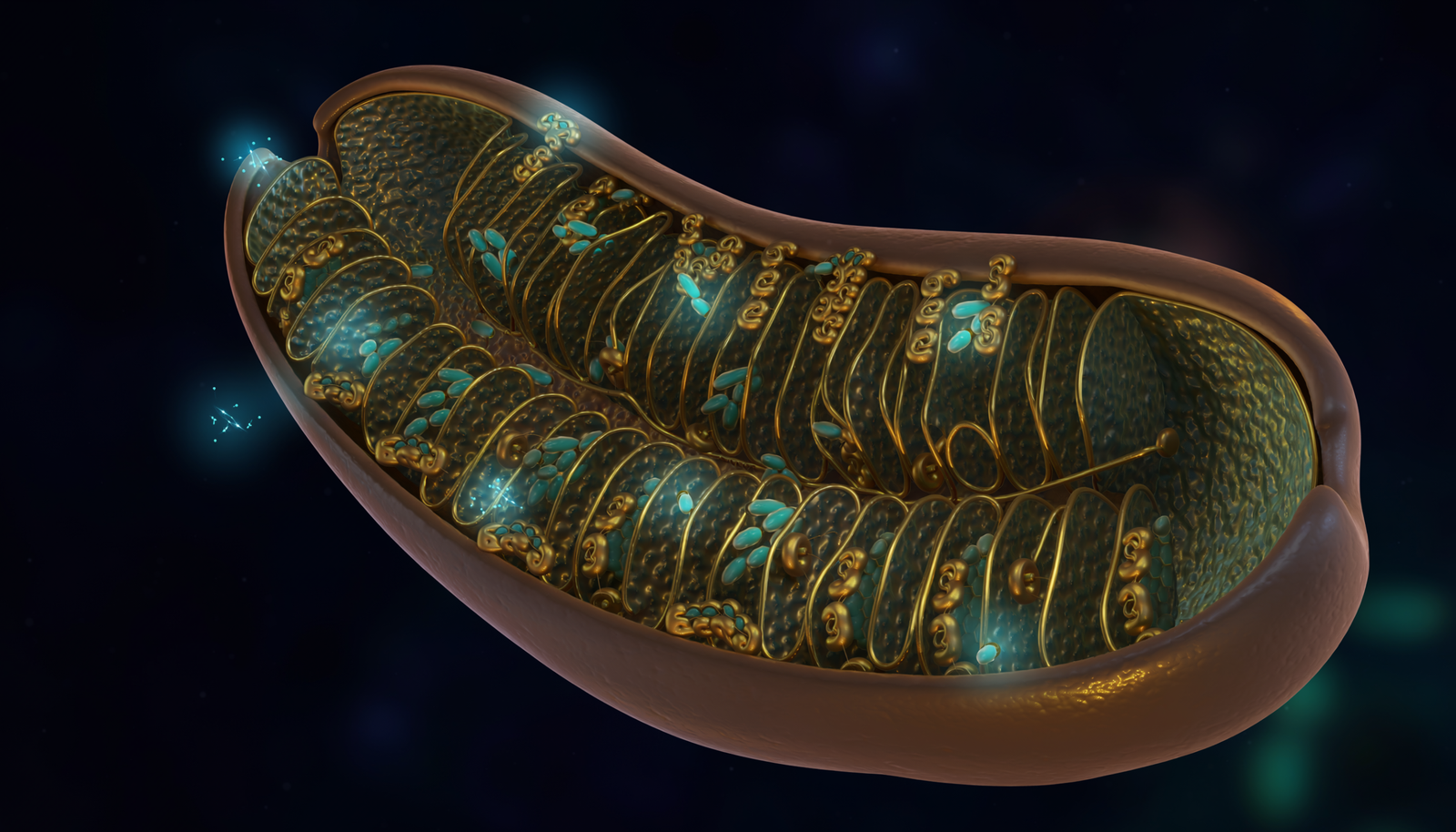
The short answer: SS-31 (also known as elamipretide) is a small synthetic peptide designed to concentrate inside mitochondria — the structures inside your cells that produce most of the body’s usable energy (ATP). Rather than mopping up cellular damage after the fact like a typical antioxidant supplement, SS-31 binds to a specific molecule called cardiolipin in the mitochondria’s inner membrane, which preclinical research suggests helps stabilize the machinery that generates energy and limits excess oxidative byproducts.
What Is SS-31 (Elamipretide)?
Most familiar antioxidant strategies work indirectly — they circulate throughout the body and try to neutralize free radicals (unstable, reactive molecules) after damage has already started. SS-31 takes a different approach. It’s a small, cell-permeable peptide engineered to selectively accumulate in the inner mitochondrial membrane, the innermost layer of the “powerhouse” structures inside nearly every cell (Drug Discov Ther, 2026). Instead of scavenging free radicals after the fact, research suggests it works upstream — helping protect the structural environment where cellular energy is actually generated.
How SS-31 Appears to Work: Key Mechanisms
Binding Cardiolipin and Stabilizing Membrane Structure
Cardiolipin is a specialized fat molecule (phospholipid) found almost exclusively in the inner mitochondrial membrane. It’s essential for maintaining the folded structure of that membrane — folds called cristae — which house the protein machinery responsible for energy production. Research indicates SS-31 binds selectively and with high affinity to cardiolipin, helping preserve this structural architecture under metabolic stress (Drug Discov Ther, 2026).
Supporting Electron Transport and Reducing Oxidative Stress
When cardiolipin degrades, it can destabilize the protein complexes of the electron transport chain — the assembly line that shuttles electrons to generate energy — leading to electron “leakage” and excess production of reactive oxygen species (unstable molecules that can damage cells). By stabilizing cardiolipin, SS-31 is thought to support more efficient electron transfer through Complexes I, III, and IV of this chain, reducing excess oxidative stress (Drug Discov Ther, 2026).
Supporting ATP Production
ATP (adenosine triphosphate) is the molecule cells use to power nearly all their activities. Preserving inner mitochondrial membrane architecture is believed to help sustain the capacity for ATP synthesis, particularly during periods of high physiological demand — a mechanism studied in both lab models and in the clinical trials described below (Drug Discov Ther, 2026).
Regulating Cell Death Signaling
Severe mitochondrial membrane damage can trigger the release of cytochrome c, a protein that helps initiate programmed cell death (apoptosis). Preclinical studies suggest that maintaining inner membrane integrity helps prevent this maladaptive release, supporting cell survival pathways under metabolic stress.
A Major Milestone: Approval for Barth Syndrome
In September 2025, regulators granted accelerated approval to elamipretide (brand name FORZINITY) for the treatment of Barth syndrome — a rare, X-linked genetic mitochondrial disorder caused by mutations in the tafazzin gene, which impairs the body’s ability to properly build cardiolipin. This is the first approved treatment for Barth syndrome, and it’s notable as the first cardiolipin-directed mitochondrial therapy to reach approval for any condition (Drug Discov Ther, 2026; Barth Syndrome Foundation, 2025).
The clinical trial data behind this approval is genuinely mixed and worth understanding honestly. In the randomized, double-blind, placebo-controlled crossover trial, elamipretide did not produce a statistically significant improvement in the primary measures — a 6-minute walk test or fatigue scores — compared to placebo. However, a subsequent 168-week open-label extension study (where all participants knowingly received the drug) showed sustained benefits, and the Barth Syndrome Foundation reports that clinical studies showed improvements in muscle strength (45%) and heart function (40%) in treated patients, with more than half of the original trial’s patients still benefiting after more than eight years (Drug Discov Ther, 2026; Barth Syndrome Foundation, 2025). The most common side effects reported were mild injection-site reactions. Because this was an accelerated approval, regulators have required a confirmatory trial to verify the clinical benefit.
Why this matters, and why it doesn’t mean what some marketing implies: this approval is specific to Barth syndrome, a serious and rare genetic disease, in patients weighing 30 kg or more, administered under medical supervision (Barth Syndrome Foundation, 2025). It is not an approval for general energy support, athletic recovery, aging, or any use outside this specific rare-disease population. Using elamipretide/SS-31 outside of its approved context remains investigational and unregulated.
Biological Focus: High-Demand Tissues
Tissues with heavy, continuous energy demands — skeletal muscle, cardiac tissue, and other high-turnover cell populations — are especially sensitive to mitochondrial dysfunction. Research on cardiolipin-targeted therapies has focused heavily on these tissues because bioenergetic decline (a drop in a cell’s capacity to generate usable energy) can slow both everyday function and the body’s capacity to repair itself over time (Drug Discov Ther, 2026). In compounding and research contexts, SS-31 is sometimes discussed alongside structural repair peptides like BPC-157 and TB-500 as addressing a different layer of the recovery process — cellular energy supply rather than blood flow or cell migration. This combined framework is largely theoretical and has not been tested together in controlled trials.
The Plain-English Breakdown
Picture your cells as small factories, and mitochondria as the power generators keeping each factory running. Generic antioxidants are like cleanup crews that arrive after a fire has already started. SS-31, by contrast, is designed to work directly on the generator’s internal wiring — the cardiolipin-rich inner membrane — to help keep the system stable before problems compound. That framing is a reasonable simplification of a real, well-studied mechanism, and it’s now backed by real clinical outcomes in one specific rare disease. It is not yet evidence that this translates into general energy or performance benefits for healthy adults.
Regulatory Status and Safety Considerations
Elamipretide (marketed as FORZINITY) is approved specifically for Barth syndrome in patients 30 kg or heavier, under an accelerated approval pathway that requires ongoing confirmatory trials (Barth Syndrome Foundation, 2025). Reported side effects in the approved population were primarily mild injection-site reactions, but safety data outside the studied rare-disease population and dosing protocol has not been established.
Frequently Asked Questions
Is SS-31 the same as elamipretide?
Yes. SS-31 is the research name for the compound now known by the international nonproprietary name elamipretide, marketed under the brand name FORZINITY (Drug Discov Ther, 2026).
Did elamipretide meet its primary goal in clinical trials?
The pivotal randomized, placebo-controlled trial did not show statistically significant improvement in its primary endpoints (6-minute walk distance and fatigue scores). Approval relied partly on a long-term open-label extension study showing sustained benefits, and regulators have required a confirmatory trial as a condition of approval (Drug Discov Ther, 2026).
How does SS-31 work at the cellular level?
It concentrates in the inner mitochondrial membrane and binds cardiolipin, a lipid essential for the membrane’s folded structure. This is thought to help stabilize electron transport, support ATP production, and reduce excess oxidative stress (Drug Discov Ther, 2026).
Can I use SS-31 for general energy or anti-aging purposes?
Outside the approved Barth syndrome indication, SS-31/elamipretide has not been established as safe or effective for general wellness, athletic recovery, or anti-aging purposes. Any such use would be off-label and investigational, and should only be discussed with a licensed provider.
Educational Disclaimer
This article is for educational and scientific-communication purposes only and is not medical advice. No medical claims are implied, intended, or expressed for uses beyond the approved indication. If you’re considering any peptide therapy, talk with your own licensed healthcare provider first, and use our free Peptide Calculator to sanity-check dosing and reconstitution math before you start.
Looking for a different angle? Our Age Strong path — see the full guide → — may also be relevant.
Want to go deeper? The Flow BioLabs Recovery Stack is all three systems in sequence: Deep Sleep Rebuild, Metabolic & Mitochondrial Optimization, and Lab Interpretation. See the program →